
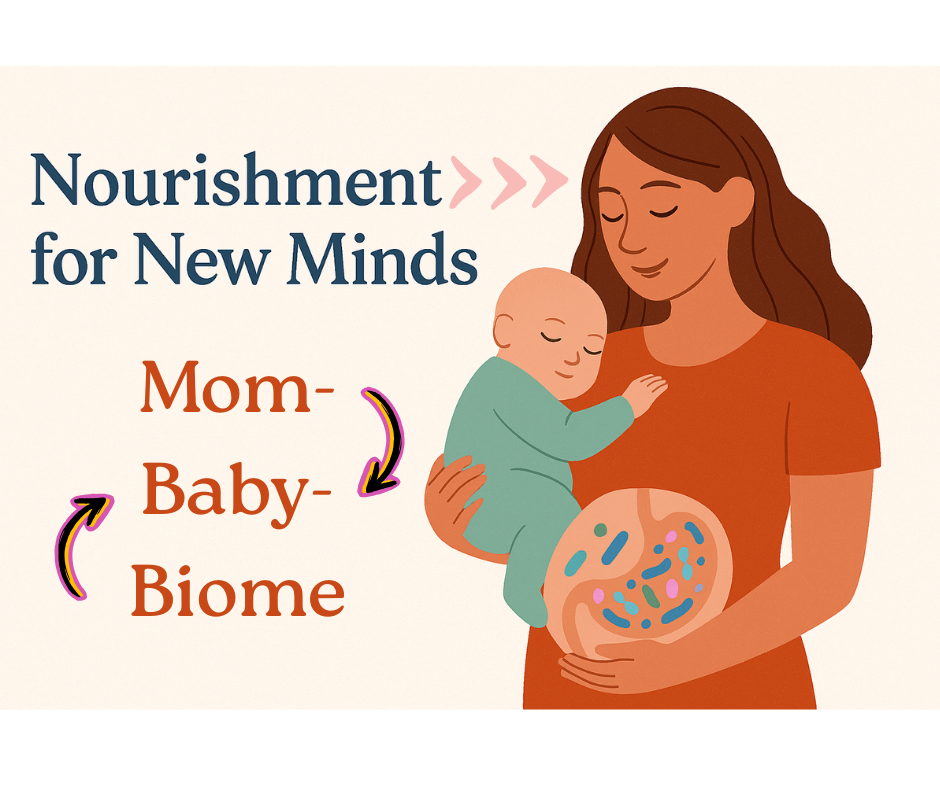
Your baby’s good health depends on yours—especially your gut health.
We know that the immune system is the body’s primary defense against infections and disease. But did you know that 70% of your immune system lives in your gastrointestinal tract? That’s why gut health is one of the strongest indicators of overall health.
Your gut microbiome is your best tool in building resiliency. This intricate microenvironment communicates through the gut-brain axis, sending signals to many other systems in the body. These messages can say “all clear” or they can sound the alarm.
When that signal is a fire alarm, inflammation ramps up. This inflammation may spread silently, and it’s a leading contributor to neurological disorders like depression, anxiety, and even Alzheimer’s disease. Research shows that gut dysbiosis (an imbalance of gut bacteria) can trigger neuroinflammation by sending inflammatory signals to the brain from microbial products in the gut. The figure below shows this mechanistic process.

Early Interventions Matter
The good news? Interventions in the first three years of life can help mediate these inflammatory mechanisms.
The key modifiable factor is diet. Improved nutrition can directly support your child’s cognitive function and long-term brain health. This is especially important for mother’s with ADHD. I want to emphasize that the data does not support this disorder being genetic, but rather multifactorial and triggered by both internal (nutrition) and external (stress) environments.
What’s the “Best” Diet?
There isn’t one perfect diet. While the Mediterranean diet is often cited as the most reliable for reducing inflammation, it’s not the specific diet that works the magic—it’s the elimination of high-inflammatory foods such as:
- Ultra-processed foods
- Overconsumption of high-impact metabolic foods (like excessive animal proteins)
Ultra-processed foods lack the essential nutrients that whole foods—fruits, vegetables, legumes, and whole grains—provide. Meanwhile, too many animal products slow digestion, increase inflammation, and strain metabolic processes.
Bottom line: The easiest way to nourish your baby’s neurodevelopment is through a whole-food diet—one that feels right for you.
Intuitive Eating & Intuitive Healing
A diet that “feels right” is often described as intuitive eating. In my practice, we call it intuitive healing because no two people process food the same way. For example, two people can eat the same meal: one absorbs 90% of the nutrients, while the other absorbs only 10%. That’s why personalization matters.
To help moms apply this in daily life, I’m developing a Mood & Meals Tracker for intuitive eating. Drop your email here to be notified upon release!
Redefining Consumption
Consumption isn’t just about food—it’s the combination of environmental, emotional, and physical factors that shape how well we absorb and benefit from nutrition. This includes:
- Intention setting before meals (yes, prayers count)
- Eating with friends or family
- Mindful chewing (pause scrolling, put your fork down between bites)
- Nutrient-rich foods that love your body back
- Hydration—often overlooked but critical
Why Hydration Is Key
Your body is ~60% water, and this water acts as the transport system for nutrients. Without proper hydration, your cells can’t fully absorb the vitamins and minerals you consume—even if your diet is great.
Hydration is one of the simplest, most effective ways to maximize nutrient absorption and sustain your energy. Try adding a glass of room temperature water to your morning routine.
Rethinking “Feel Good” Foods
The best diet is the one that truly makes you feel your best. But let’s get real: your pumpkin spice latte might feel good in the moment, but that sugar-soaked cortisol spike may be increasing anxiety and making you crave another just hours later.
Intuition doesn’t always go hand in hand with easy dopamine. Real intuition supports steady energy, stable mood, and deep nourishment.
Of course, we all need comfort foods for tough days. The trick is to find a go-to snack that loves you back as much as you love it.
Simple, Actionable Steps for Moms
I promised to keep this simple and actionable for even the busiest moms. Here are steps you can start today to optimize your baby’s brain health and your own:
- Prioritize protein (amino acids are your baby’s building blocks for all cell types)
- Eat foods that love you back (those that don’t trigger inflammation)
- Incorporate whole foods into every meal (nutrient dense meals and snacks)
- Reduce processed foods (cheap dopamine does not equal nourishment)
- Eliminate ultra-processed foods
- Focus on foods rich in B vitamins, folate, iron, and magnesium
Pregnancy Power Foods for Mom & Baby
Here’s a quick list of nutrient-rich foods that support pregnancy, postpartum recovery, and your baby’s neurodevelopment:
- Folate & Folic Acid: spinach, beans, asparagus, oranges, nuts
- Calcium: cheese, milk, yogurt, salmon, spinach
- Magnesium: leafy greens, almonds, chia seeds, whole grains, avocado
- Vitamin D: fish, milk, eggs
- Protein: cottage cheese, poultry, fish, lentils, milk, peanut butter, eggs
- Iron: meat, spinach, beans, poultry
Start Today
The internet is filled with conflicting advice, but wellness shouldn’t feel complicated.
Remember: you are the expert of your body. No doctor or scientist knows your exact balance better than you do. Still, science consistently supports a balanced diet, hydration, and lifestyle choices as the foundation of lifelong health—for both you and your baby.
For more accessible wellness tailored to your lifestyle, book a free client alignment call —and let’s build your personalized path to optimal mom-and-baby health.
Leave a Reply